
Approach
OUR CENTRAL TENET
Beyond the methodologies and the allure of the latest fads, there is a simpler truth.
OUR APPROACH
Bridging people to the wisdom within them
We believe that individuals are not empty vessels awaiting instruction. They possess insight, experience, and wisdom within them—frequently unarticulated, and at times unrecognised.
Our role is to draw it forth.
"A person cannot teach another person directly; a person can only facilitate another's learning."
Carl Rogers
This principle informs our work. We establish the conditions, pose the questions, and hold the space, enabling individuals to connect with their innate wisdom, and to become who they are capable of being.
A SIMPLE ANALOGY
Treating the Symptom vs. Seeking the Root
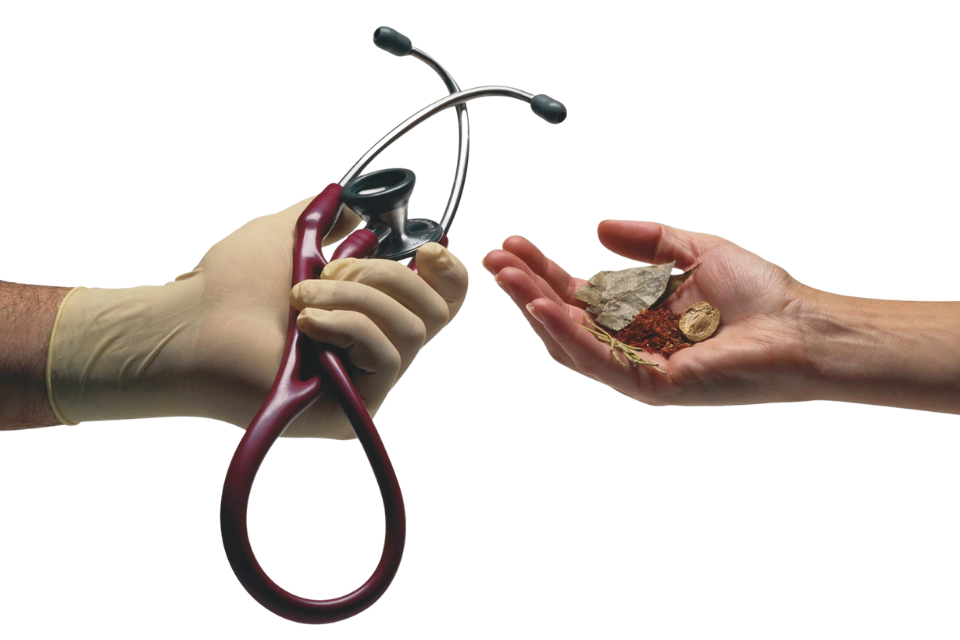
There is no quick fix for developing people. Anyone claiming otherwise is either naive or disingenious.
Consider the difference between Western medicine and Traditional Chinese Medicine (TCM). Western medicine treats the symptom, offering immediate relief and targeted intervention. TCM, by contrast, takes time to remediate and recondition the body, addressing the root of the imbalance. Both approaches are valid.
The distinction is clear: The Western approach deconstructs the situation and treats the evident symptoms, while the Eastern approach regards the whole and seeks the root of the imbalance.
The same principle applies to transforming a culture or developing people.
Think about the last time someone changed you. A teacher, a manager, a mentor, a parent. Someone who saw more in you than you were showing. They did not flatter you, fix you, or push you. Yet around them, you became more. You stepped up. You took ownership. You showed up for your own life.
If you think about it, it probably was not anything specific they said. It was who they were. They were more of a catalyst than a direct agent of change.
That kind of influence cannot be delivered in a two-day programme. It cannot be installed through a module or a framework. Who we are with others is shaped over years, and will not be reshaped in a day.
Growth and development happens through an iterative cycle of incremental improvement and the occasional breakthrough.
The influence of the environment and the culture of an organisation—the bigger system of which the particular situation is a part—for sustainable change if often discounted.
“You rarely improve an organisation as a whole by improving the performance of one or more of its parts.”
Russell Ackoff
THE IDEA
As simple as understanding, and taking action
There is an ancient paradox, attributed to Socrates: the wisest person is the one who knows that they know nothing. It is a striking idea, but perhaps incomplete. Wisdom is not a single relationship with knowledge. It is several, held at once.
There are things we know that we know. Our name, our trade, the skills we have practiced until they became second nature.
There are things we know we do not know. The gaps we can name, the questions we can ask, the places we know to look for help.
Then there are the two chambers most of us never notice.
The first is what we do not know we do not know. The blind spots: When the assumptions we hold are so deep they feel like facts. The patterns we carry into every room without seeing them. We cannot find these on our own, no matter how intelligent or self-aware we believe ourselves to be. They are invisible from the inside.
The second is what we do not know we know. The intuition of the experienced practitioner. The judgement that lives in the body, built over thousands of hours. The wisdom we carry but have never put into words. This is often where a person’s deepest capability resides, unnamed and therefore unused.
Most development programmes work only in the first two chambers. They deliver what is known, and they address what participants already recognise as missing. Useful, but limited.
Real learning and breakthroughs are to be found in the other two. It requires the willingness to be wrong—to let go of the known—to see, even the old and familiar, with new eyes.
“What lies behind us and what lies before us are tiny matters compared to what lies within us.”
Ralph Waldo Emerson